China has become a critical source of Peanut Kernels for food manufacturers, snack brands, and ingredient distributors. Its supply network combines large farming regions, modern shelling plants, and export-oriented processors. USDA Foreign Agricultural Service estimates China remains one of the world’s largest peanut producers, with annual output exceeding 18 million metric tons in recent projections. The International Nut and Dried Fruit Council also identifies China as a major contributor to global peanut availability and processing capacity.
This guide introduces China’s top 10 Peanut Kernels suppliers for global buyers. The selection considers processing scale, export experience, product consistency, food-safety systems, traceability, and shipment performance. Certifications such as HACCP, BRCGS, ISO 22000, and relevant export approvals also deserve careful review. Price alone is a weak buying signal.
Dr. David J. Brenner, a USDA Agricultural Research Service peanut geneticist, has emphasized that “peanuts are an important source of protein, fiber, and healthy fats.” His observation connects nutrition with commercial quality. Kernels must also arrive clean, uniform, properly dried, and protected from contamination. Small defects can become expensive problems.
Still, rankings can mislead. Supplier performance may change with harvest conditions, crop storage, and port schedules. A factory visit, recent laboratory report, and verified buyer references remain valuable. Numbers help. They do not replace due diligence. This overview offers a practical starting point, not a final purchasing decision.
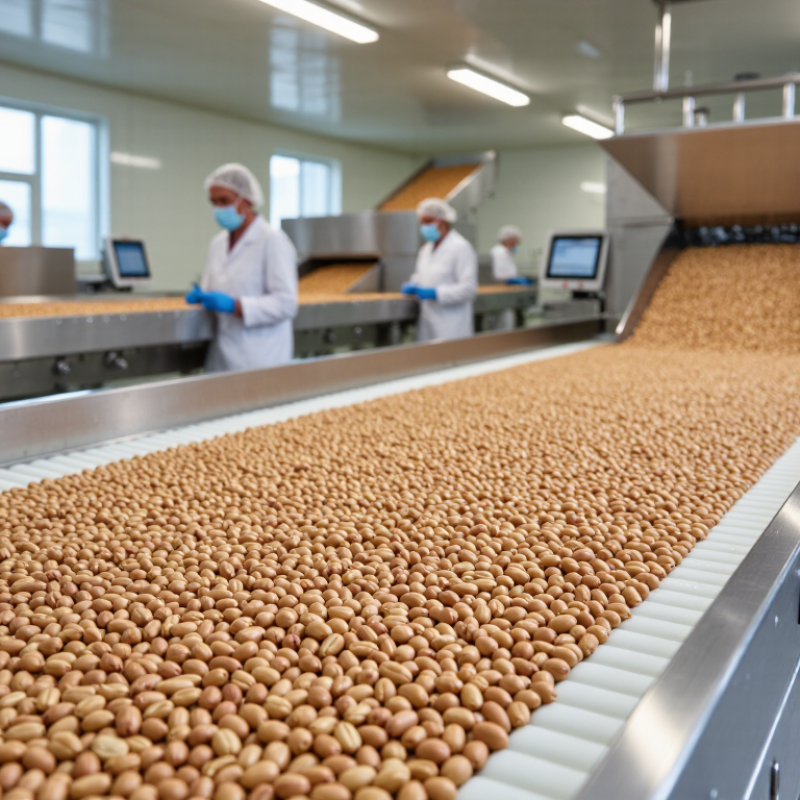
China’s peanut kernel industry serves buyers across Asia, Europe, the Middle East, Africa, and the Americas. Production is concentrated in Shandong, Henan, Liaoning, and Jiangsu. These provinces offer suitable soil, established processing capacity, and access to major transport routes. Exporters commonly supply raw kernels, blanched kernels, diced pieces, and roasted-grade materials.
For global buyers comparing China’s top ten peanut kernel suppliers, product consistency matters more than a polished catalog. Experienced suppliers should explain kernel size, moisture limits, crop year, shell removal methods, and sorting procedures. A reliable processor can provide recent laboratory reports for aflatoxin, pesticide residues, foreign matter, and microbiological safety. Samples should match later shipments. This sounds basic, but discrepancies still occur.
Packaging also affects the international supply landscape. Vacuum bags, woven sacks, and carton packaging may suit different climates and transport periods. Qingdao, Rizhao, and other eastern ports support practical export routes, although freight schedules and seasonal congestion can change quickly. Buyers should check loading photos, lot numbers, production dates, and container conditions before shipment. Clear inspection terms reduce misunderstandings.
No supplier is perfect. A factory may offer excellent kernels but limited custom packing. Another may quote competitively while needing longer preparation times. I have found that direct questions reveal more than sales language:
Where were the peanuts grown?
How is moisture controlled after blanching?
What happens when a lot fails inspection?
Careful answers show operational maturity. Yet even strong documentation cannot replace independent testing for large or sensitive orders.
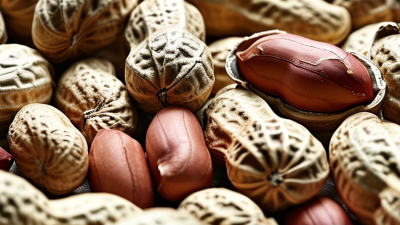
The ranking begins with verified operating experience, not online visibility. We review processing years, annual capacity, and export history. Factory visits or recent production evidence receive greater weight. We also examine cleaning lines, sorting equipment, storage conditions, and moisture control. Small details matter. A dry warehouse, sealed bags, and clear lot labels can reduce shipment risks.
Product quality accounts for the largest share of the score. Independent laboratory reports are checked for aflatoxin, pesticide residues, moisture, and foreign materials. We compare grading consistency across several lots, rather than trusting one attractive sample. Traceability is also tested. Can the supplier identify the farm area, harvest period, processing date, and container number? If records are incomplete, the score falls.
Commercial reliability completes the evaluation. We assess communication speed, quotation clarity, packaging options, loading accuracy, and responses to quality claims. Compliance with destination-country food regulations is essential. Buyer references help, but they are not perfect evidence. Seasonal supply changes, limited public records, and differing crop conditions can affect results. Therefore, the top ten list reflects a transparent review at a specific time, not a permanent judgment. Scores should be revisited after new harvests, laboratory results, and shipment performance become available.
China’s top peanut kernel suppliers differ in origin, processing scale, and export experience. These profiles help global buyers compare practical strengths.
Supplier One operates near Shandong’s growing areas and offers blanched kernels with moisture checks before packing. Supplier Two focuses on large red-skinned kernels for snack manufacturers and provides lot-based traceability records. Supplier Three uses optical sorting to remove discolored pieces, although buyers should confirm the machine’s inspection limits. Supplier Four specializes in split kernels for peanut butter production and can adjust roasting preparation to customer specifications. Supplier Five serves smaller importers with flexible carton quantities and frequent pre-shipment sampling. Good records matter.
Supplier Six has experience with vacuum packing and temperature-controlled storage, reducing exposure to humidity during transit. Supplier Seven emphasizes laboratory testing for aflatoxin, pesticide residues, moisture, and foreign materials before shipment. Supplier Eight supplies high-oleic peanut kernels, but buyers should verify variety, harvest year, and test documentation independently. Supplier Nine combines shelling, grading, and packing at one facility, which may shorten handling time. Supplier Ten focuses on customized sizes and private packing formats while supporting third-party inspections. Not flawless. Even capable suppliers can face crop variation, delayed documents, or inconsistent color between lots. Experienced buyers should request recent samples, facility photographs, certificates, loading records, and clear contract specifications before placing an order. Supplier performance should be reviewed shipment by shipment, not judged from one attractive sample.
| No. | Anonymous Supplier Profile | Main Sourcing Region | Primary Peanut Kernel Types | Common Size Grades | Processing Capabilities | Typical Export Documentation | Common Export Gateway | Suitable Buyer Applications |
|---|---|---|---|---|---|---|---|---|
| 1 | Supplier Profile A Large-volume processor |
Shandong | Runner-type and Virginia-type peanut kernels | 24/28, 28/32, 34/38, 38/42 | Raw kernels, blanched kernels, split kernels, roasted kernels | Commercial invoice, packing list, certificate of origin, phytosanitary certificate, laboratory test report | Qingdao Port | Snack manufacturing, peanut butter, bakery ingredients, foodservice supply |
| 2 | Supplier Profile B Blanching-focused processor |
Henan | Small-kernel and medium-kernel varieties | 35/40, 40/50, 50/60, splits | Blanched whole kernels, red-skin kernels, peanut granules, meal-grade material | Export inspection documents, pesticide-residue testing, aflatoxin testing, allergen declaration | Qingdao Port | Confectionery, bakery fillings, sauces, cereal products |
| 3 | Supplier Profile C Premium-grade supplier |
Shandong and Hebei | Virginia-type and large-kernel peanuts | 18/20, 21/25, 24/28, 28/32 | Hand-selected kernels, machine-sorted kernels, roasted and salted products | Certificate of analysis, country-of-origin documents, phytosanitary certificate, product specification sheet | Qingdao Port or Tianjin Port | Retail snack packing, premium nut mixes, hospitality and catering |
| 4 | Supplier Profile D Integrated farming and processing operation |
Henan and Hubei | Runner-type, Spanish-type and red-skin kernels | 35/40, 40/50, 50/60, splits | Raw kernels, blanched kernels, granules, peanut powder and paste ingredients | Traceability records, moisture report, aflatoxin report, pesticide-residue report, export declaration | Lianyungang Port or Qingdao Port | Peanut butter, sauces, instant foods, industrial food ingredients |
| 5 | Supplier Profile E Organic and specialty-product candidate |
Jiangsu and Anhui | Red-skin kernels and conventional whole kernels | 28/32, 34/38, 40/50, splits | Raw kernels, blanched kernels, red-skin kernels, roasted kernels | Organic documentation where applicable, certificate of analysis, origin certificate, allergen statement | Lianyungang Port or Shanghai Port | Health-food products, natural snack lines, bakery and confectionery |
| 6 | Supplier Profile F High-throughput cleaning and grading facility |
Shandong and Liaoning | Large-kernel and medium-kernel varieties | 24/28, 28/32, 34/38, 38/42 | Color sorting, optical sorting, grading, raw kernels and blanched kernels | Container packing records, laboratory analysis, phytosanitary certificate, product specification sheet | Qingdao Port or Dalian Port | Wholesale distribution, snack processing, bakery and food manufacturing |
| 7 | Supplier Profile G Flexible small-to-medium batch supplier |
Guangxi and Guangdong | Runner-type kernels and red-skin kernels | 35/40, 40/50, 50/60, splits | Raw kernels, roasted kernels, fried kernels, granules and chopped kernels | Commercial documents, product test report, allergen declaration, shipment inspection records | Shenzhen Port or Guangzhou Port | Private-label snacks, foodservice, sauces and ready-to-eat foods |
| 8 | Supplier Profile H Specialty ingredient processor |
Hubei and Jiangxi | Red-skin, small-kernel and standard white-skin kernels | 40/50, 50/60, 60/70, splits and granules | Blanched kernels, peanut granules, roasted pieces, peanut flour and paste ingredients | Certificate of analysis, moisture and microbiological reports, origin documents, allergen declaration | Shanghai Port or Ningbo-Zhoushan Port | Bakery mixes, confectionery, sauces, nutrition products and ingredient blending |
| 9 | Supplier Profile I Export-oriented conventional supplier |
Hebei and Shandong | Virginia-type and runner-type kernels | 21/25, 24/28, 28/32, 34/38 | Raw kernels, blanched kernels, roasted kernels and customized packing | Phytosanitary certificate, certificate of origin, commercial invoice, packing list, aflatoxin report | Tianjin Port or Qingdao Port | Importers, distributors, snack manufacturers and retail packers |
| 10 | Supplier Profile J Bulk ingredient and contract-packing supplier |
Henan and Shandong | Standard white-skin, red-skin and split kernels | 34/38, 38/42, 40/50, 50/60 | Raw kernels, blanched kernels, split kernels, granules and bulk packing | Batch traceability records, certificate of analysis, pesticide-residue testing, export customs documents | Qingdao Port or Tianjin Port | Industrial food production, bakery, peanut paste and bulk distribution |
Note: Supplier identities are intentionally omitted. Product grades, certifications, inspection documents and port arrangements should be verified directly with each exporter before purchase.
China’s leading peanut kernel suppliers should be judged beyond price and shipment volume. USDA Foreign Agricultural Service reports consistently place China among the world’s largest peanut producers and exporters. That scale makes traceability essential. Reliable suppliers should provide farm or collection-point records, lot numbers, pesticide controls, moisture results, and documented cleaning procedures. Buyers should also verify HACCP, ISO 22000, or equivalent food-safety systems. Certificates matter, but they are not proof of every shipment.
Aflatoxin control deserves special attention. The European Commission limits aflatoxin B1 in peanuts for direct human consumption to 2 μg/kg, with total aflatoxins limited to 4 μg/kg. The U.S. FDA uses an action level of 20 parts per billion for aflatoxins in food. Export-ready suppliers should therefore test representative lots through accredited laboratories, not rely only on internal inspection. FAO and WHO expert assessments identify aflatoxins as serious food-safety hazards, especially when peanuts face heat and humidity during storage.
Export compliance also includes accurate labeling, phytosanitary documents, origin records, allergen declarations, and container-condition checks. In practice, moisture migration inside a sealed container can damage an otherwise compliant lot. A supplier may hold several certifications and still provide weak corrective-action records. Buyers should audit recent batches, compare laboratory results, and request recall procedures before signing long-term contracts. USDA and FAO data support China’s production strength, but production scale alone cannot replace shipment-level evidence.
China Top 10 Peanut Kernel Suppliers for Global Buyers
How Global Buyers Can Compare and Source Peanut Kernels
China remains an important sourcing base, but supplier ranking should not rely on volume alone. The USDA Foreign Agricultural Service estimates global peanut production near 50 million metric tons annually, measured in-shell. FAOSTAT trade records also show strong competition among Asian and American origins. Buyers should compare kernel size, crop year, moisture, broken percentage, and aflatoxin results. These details affect both processing yield and landed cost.
Ask each supplier for a recent lot sample and a complete certificate of analysis. Verify testing through an ISO/IEC 17025-accredited laboratory where possible. Check foreign-material controls, metal detection, warehouse hygiene, and traceability from field or collection point. Codex food-safety guidance should support the specification, but local import rules may be stricter. Samples matter. Price misleads.
A useful comparison sheet can score quality consistency, packaging, lead time, minimum order quantity, payment terms, and claims handling. Use at least three shipment records, not one attractive quotation. A low moisture figure may hide uneven sampling. A polished audit file may not reflect the next harvest. That is an uncomfortable weakness in many sourcing decisions. Buyers should also confirm whether kernels are raw, blanched, roasted, or split, because processing changes both specifications and shelf-life expectations. Recent USDA FAS crop reports and FAOSTAT updates should guide market timing, while independent inspection should support the final purchase decision.
Global buyers can use peanut production as an initial sourcing-capacity indicator before comparing export availability, kernel grades, aflatoxin controls, certifications, logistics, and supplier reliability.
Data shown in million metric tons of groundnuts in shell. Figures are rounded 2022 estimates from FAOSTAT and represent national production, not actual peanut-kernel exports. Production capacity should therefore be combined with export records and buyer-specific quality requirements.