Global buyers are searching for dependable Raw Sunflower Seeds suppliers, not merely the lowest quotation. Supply reliability matters because harvest volumes, weather, logistics, and regional demand can change quickly. The USDA Foreign Agricultural Service’s Oilseeds: World Markets and Trade report estimated global sunflowerseed production at roughly 53 million metric tons in the 2024/25 season. That scale shows the market’s depth. It also shows its complexity.
Quality remains the real starting point. Buyers should examine moisture, foreign material, seed size, oil content, pesticide documentation, and aflatoxin controls. A clean sample is useful. A documented supply chain is stronger. The European Commission’s food-safety framework and Codex guidance provide practical reference points for testing and traceability. However, specifications can differ between food, snack, bird-feed, and oil-processing applications. A supplier suitable for one buyer may fail another buyer’s requirements.
John Sandbakken, executive director of the National Sunflower Association, has described sunflowers as “a good fit for many crop rotations.” His observation matters because sustainable supply begins at farm level, not inside a warehouse. In this guide, we compare leading Raw Sunflower Seeds suppliers by origin, processing capacity, certifications, packaging, minimum order quantities, and export experience. We also consider shipment terms, inspection procedures, and communication quality. These details are easy to overlook.
They should not be.
Trade data can become outdated. Supplier claims also require verification. Buyers should request recent laboratory reports, harvest information, and reference shipments before signing contracts. No list can remove every risk. It can, however, make the purchasing decision more transparent, practical, and defensible.
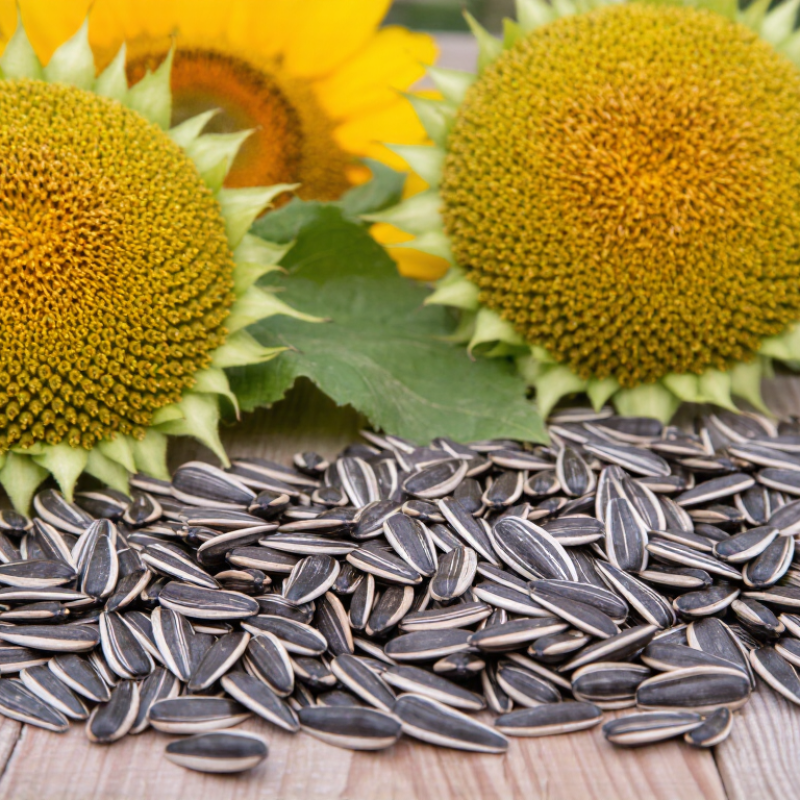
Raw sunflower seeds are mature sunflower achenes sold without roasting, salting, or flavoring. They may arrive in-shell or as hulled kernels. The main commercial groups are oilseed, confectionery, striped, black, and high-oleic varieties. Oilseed types are usually smaller and darker, while confectionery seeds are larger, fuller, and better suited to snacks or bakery use.
Scale matters. The USDA Foreign Agricultural Service’s Oilseeds: World Markets and Trade report projected global sunflower seed production at roughly 55 million metric tons for 2024/25. This volume includes seeds for crushing, food processing, and direct consumption. Buyers should not treat production volume as a quality guarantee. It only shows supply potential.
Physical inspection still matters. Good raw seeds should have a clean, fresh aroma, natural color, and limited broken kernels. Many trade specifications place moisture near 8–9%, though the exact limit depends on destination and processing needs. Kernels also require checks for foreign material, insect damage, rancidity, and microbial risks. Aflatoxin testing may be requested, even when the perceived risk seems low. That shortcut can mislead.
For global purchasing, certificates of analysis should match the shipment, not just the supplier’s general profile. Sampling from several bags is more reliable than judging one handful. Hull color helps identify variety, but it cannot confirm freshness. This is where buying gets less tidy. Crop year, storage temperature, ventilation, and transport time can change the product before arrival.
Top Raw Sunflower Seeds Suppliers for Global Buyers?
Russia, Ukraine, and the European Union remain major sunflower seed producing regions. USDA Foreign Agricultural Service estimates 2024/25 global production at roughly 56 million metric tons. Russia contributes about 17 million tons, while Ukraine supplies approximately 14 million tons. The European Union follows with around 10 million tons. These figures change with weather, planted area, and regional disruptions. Crop estimates are useful, but they are not perfectly stable.
Export routes also reveal different commercial strengths. Ukraine and Romania serve Mediterranean and European buyers efficiently. Bulgaria and Moldova are important suppliers for nearby processing markets. Turkey remains a significant destination, especially for food processing and snack consumption. China and several Middle Eastern markets also import substantial volumes. UN Comtrade data for HS code 120600 shows how shipment values and volumes shift between origins each year. This pattern can confuse new buyers. The largest producer is not always the best supplier for a specific port.
Tips: Request a recent certificate of analysis, crop year, moisture level, foreign-matter percentage, and pesticide-residue results. Confirm whether seeds are confectionery-grade or oilseed-grade. Check loading-port capacity and seasonal harvest timing before signing. I would also compare at least three origins, because freight savings can disappear after quality deductions. A lower offer may simply reflect smaller kernels or weaker cleaning.
Estimated sunflower seed production by major origin, 2023/24 crop year.
Russia, Ukraine and the European Union are the leading sunflower seed production areas, together accounting for most global supply. Black Sea origins commonly serve buyers in Türkiye, the European Union, the Middle East and North Africa. Argentina is an important supplier from the Americas, while China and Türkiye are significant producers and importers in their regional markets.
Source: USDA Foreign Agricultural Service Production, Supply and Distribution database; figures are rounded estimates in million metric tonnes.
Choosing reliable raw sunflower seed suppliers requires more than comparing prices. A polished website proves little. Buyers should request the harvest year, growing region, seed variety, moisture level, purity rate, and foreign-material limits. These details reveal whether a supplier understands quality control or simply repeats sales language.
Ask for a recent sample before signing a contract. Inspect the seeds for uniform color, clean shells, fresh smell, and signs of insect damage. An independent laboratory report should cover aflatoxins, pesticide residues, microbiological safety, and other market-specific requirements. The supplier should also provide clear lot numbers and traceability records. Small details matter.
Check how the seeds are stored. Dry, ventilated warehouses and sealed food-grade bags reduce quality loss during transit. Request photos showing pallets, labeling, and loading conditions. Reliable suppliers explain their sampling method and respond directly when specifications change. They should provide export documents required by the destination country, including certificates issued by authorized agencies where applicable.
Price is only one part of the calculation. Compare test results, payment terms, delivery history, and claims procedures. A supplier who avoids written commitments creates unnecessary risk. Still, no evaluation is perfect. Laboratory results can represent only one lot, and transport delays may affect freshness. Recheck critical information before each shipment, even after a successful order. That habit can feel excessive. It is often practical.
| Evaluation Dimension | Practical Benchmark for Raw Sunflower Seeds | Documents or Evidence to Request | Why It Matters to Global Buyers | Priority |
|---|---|---|---|---|
| Product Identity | Clearly defined as raw, unroasted sunflower seeds, with the type, variety, size, shell status, and intended use specified. | Detailed product specification, product photographs, sample label, and technical data sheet. | Prevents the buyer from receiving a product that does not match food-processing or retail requirements. | High |
| Moisture Content | Usually agreed within approximately 7%–9%, depending on whether the shipment contains in-shell seeds or kernels and on the contract specification. | Recent independent laboratory report and batch-specific certificate of analysis. | Excess moisture increases the risk of mold, spoilage, heating, and reduced storage life. | High |
| Purity and Foreign Material | A commercially common target is foreign material at or below 1%, subject to the buyer's specification and destination regulations. | Purity analysis, cleaning-process description, and pre-shipment inspection results. | Lower impurity levels reduce cleaning costs, processing losses, and customs or quality disputes. | High |
| Defective and Damaged Seeds | Limits for insect-damaged, moldy, rancid, broken, discolored, or immature seeds should be stated numerically in the purchase contract. | Defect classification standard, sample inspection record, and laboratory or surveyor report. | Visible and hidden defects affect yield, taste, food safety, and the final value of the shipment. | High |
| Food Safety Testing | Testing should cover relevant risks such as aflatoxins, pesticide residues, heavy metals, Salmonella, and other hazards required by the destination market. | Accredited laboratory results, hazard-control plan, and batch traceability records. | Food-safety non-compliance can lead to rejected cargo, recalls, penalties, and reputational damage. | Critical |
| Harvest and Crop Year | The crop year, harvest period, storage period, and stock rotation method should be disclosed for every shipment. | Harvest declaration, lot number, warehouse records, and traceability statement. | Freshness and storage history influence flavor, oil quality, germination, and shelf life. | Medium |
| Calibration and Size Grading | Size should be expressed using a consistent count, sieve, or grading method, with agreed tolerances for oversize and undersize seeds. | Grading chart, sieve results, representative sample, and inspection procedure. | Consistent sizing improves roasting, shelling, packaging appearance, and production efficiency. | Medium |
| Processing and Cleaning Capability | Reliable facilities should be able to clean, sort, remove stones and metal, control dust, and maintain separated production lots. | Facility profile, process flow chart, equipment list, hygiene procedures, and audit records. | Adequate processing capability supports stable quality at commercial volumes. | High |
| Packaging and Palletization | Common export formats include 25 kg or 50 kg food-grade bags and larger bulk bags, with packaging selected according to handling and destination requirements. | Packaging specification, bag material declaration, pallet plan, and loading photographs. | Suitable packaging protects the product from moisture, contamination, tearing, and transport damage. | Medium |
| Certification and Regulatory Compliance | The supplier should maintain certifications or documented controls appropriate to the buyer's market, such as food-safety management, hazard analysis, traceability, and allergen control. | Valid certificates, audit summaries, corrective-action records, and export compliance documents. | Verified systems help satisfy importer, retailer, and regulatory requirements. | Critical |
| Traceability and Recall Readiness | Each lot should be traceable from farm or collection point through processing, storage, loading, and final shipment. | Lot coding system, supplier approval records, warehouse logs, and mock-recall procedure. | Clear traceability allows rapid investigation and targeted withdrawal if a problem occurs. | High |
| Minimum Order Quantity and Capacity | The supplier should state minimum order quantity, monthly capacity, peak-season availability, and allocation policy during crop shortages. | Capacity statement, production schedule, inventory report, and previous shipment references without confidential pricing data. | Capacity transparency helps buyers plan contracts and avoid supply interruptions. | Medium |
| Lead Time and Shipment Reliability | The quotation should specify production lead time, loading window, documentation time, port of loading, and procedures for delay notification. | Delivery schedule, shipping records, booking confirmation process, and service-level terms. | Predictable delivery reduces stockouts, demurrage, production downtime, and customer service problems. | High |
| Trade Terms and Documentation | The quotation should identify the agreed Incoterm, currency, payment terms, validity period, export documents, certificate of origin, and inspection requirements. | Pro forma invoice, sample shipping document set, export registration, and clearly stated commercial terms. | Complete documentation reduces customs delays and prevents misunderstanding over costs and responsibilities. | High |
| Sample-to-Bulk Consistency | The approved sample should be linked to a written specification, and the production lot should be checked against the same quality parameters before loading. | Sealed reference sample, signed specification, pre-shipment inspection report, and retention-sample policy. | This is one of the most effective safeguards against quality differences between samples and commercial shipments. | Critical |
| Complaint and Corrective-Action Process | A reliable supplier should define response time, investigation steps, replacement or credit options, and corrective-action deadlines for non-conforming goods. | Quality agreement, complaint procedure, claim-resolution examples, and contact escalation chart. | Transparent after-sales procedures limit financial losses and support long-term cooperation. | Medium |
Note: Quality limits should be finalized in the sales contract according to the seed type, processing purpose, destination-country regulations, and the buyer's approved specification.
Top Raw Sunflower Seeds Suppliers for Global Buyers
Reliable raw sunflower seed suppliers should provide measurable quality evidence, not attractive promises. Seed samples need checks for moisture, purity, foreign materials, insect damage, and rancidity. Size and color should match the agreed specification. A clean warehouse matters too. Bags should be sealed, labeled, and stored away from walls and damp floors.
Food safety controls require stronger attention. Suppliers should operate documented HACCP procedures and maintain a traceable lot system. ISO 22000 or FSSC 22000 certification can support confidence, but certification alone proves little without recent audit records. Buyers should request certificates of analysis for Salmonella, aflatoxins, pesticide residues, and heavy metals. Testing laboratories should use recognized methods and show clear sample identification. Organic claims require valid certification, not informal wording.
Traceability must work in practice. A supplier should identify the farm or collection point, harvest period, processing site, and shipment lot. Recall exercises can reveal weak records before a real incident occurs. Destination-country limits may differ, so buyers should verify current import requirements with local authorities. Packaging also deserves inspection. Torn liners, condensation, or unclear labels can create avoidable risks.
Some checks are easy to overlook. I have seen specifications become vague when buyers focus only on price. That approach often creates disputes later. No system is perfect. Regular testing, supplier reviews, and honest reporting of deviations build more reliable trade relationships.
Top Raw Sunflower Seeds Suppliers for Global Buyers?
Global buyers should compare landed cost, not only the supplier’s quoted price. The USDA Oilseeds: World Markets and Trade reports show that sunflower seed output changes with weather, acreage, and regional conflict. These shifts can quickly affect export availability and monthly offers. Request prices by grade, origin, crop year, packaging, and Incoterm. A low offer can still be a bad buy.
Trade data from UN Comtrade and the International Trade Centre commonly classifies raw sunflower seeds under HS 1206. Use this code when checking import volumes, customs values, and supplier activity. However, customs values are not identical to final purchase prices. They may exclude inland delivery, inspection, insurance, and port charges. Ask for a complete landed-cost sheet. Include container freight, terminal fees, duties, and currency risk. Freight changes quickly.
Shipping quality needs practical control. Require moisture results, foreign-material limits, kernel damage data, and a retained sample before loading. FAOSTAT production statistics help buyers compare supply trends, but they cannot verify one shipment. Import authorities may require phytosanitary certificates, pesticide-residue compliance, labeling, and approved treatment records. Requirements differ by destination and product use. Check them before contracting.
Small mistakes become expensive. A missing document can delay a container. A dry-looking sample may still fail laboratory testing. Experienced buyers should inspect loading photos, seal numbers, and independent test reports. No spreadsheet replaces a retained sample.